Participatory Environmental Monitoring in Mining Contexts: A Practitioner Checklist to Start PEM
Step 2: Prioritize concerns and design the monitoring scheme
Step overview:
The first table gives a summary of issues and challenges present during this step. Below the table more detail can be found.
| Pillar | Key tasks | Key questions to discuss |
|---|---|---|
| Governance | Assign clear roles for all the involved parties, especially the community members |
|
| Environment | Define monitoring details: what, why, when, where, by whom, and using which tools |
|
| Learning | Identify partners that can facilitate knowledge sharing |
|
| Gender | Incorporate a gender perspective in the overall monitoring design |
|
| Governance | ||
| Key tasks | Key questions to discuss | |
| Assign clear roles for all the involved parties, especially the community members |
|
|
| Environment | ||
| Key tasks | Key questions to discuss | |
| Define monitoring details: what, why, when, where, by whom, and using which tools |
|
|
| Learning | ||
| Key tasks | Key questions to discuss | |
| Identify partners that can facilitate knowledge sharing |
|
|
| Gender | ||
| Key tasks | Key questions to discuss | |
| Incorporate a gender perspective in the overall monitoring design |
|
|
You can download a worksheet and use it to write down your thoughts about the proposed tasks and discussion questions as part of the planning.
Governance

Key roles in PEM are defining monitoring priorities, implementing the monitoring plan, covering the costs of PEM, communicating the results and using the data.
An additional role may be created in some situations, in the form of a secretariat, to support the PEM work.
Executed by community members
While this approach suggests that communities work by themselves, it could be that they have the autonomy to define all aspects of monitoring, even if a third party carries out certain tasks. Every party must have clarity in their role and, how each group carries out their respective roles.
Executed in partnership
Enabling community members’ participation should be the central focus of all PEM efforts. Community members’ aspirations must align with their actual roles in the monitoring effort. Negotiation and trade-offs between parties will take place to accommodate each party’s aspirations.
Supervised by community members
When the company or the State leads monitoring, it is important that communities can voice their concerns. Involving them in defining monitoring priorities or addressing monitoring results can be a way to legitimize the PEM efforts.
Environment
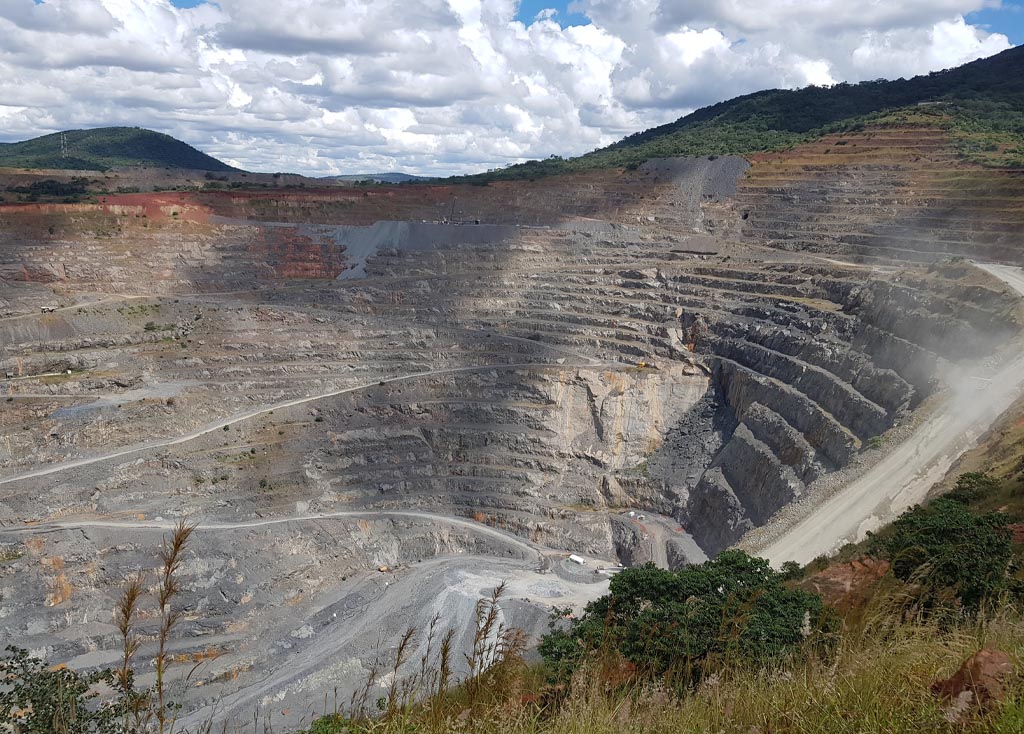
Defining the monitoring details can involve community members, resulting in varying arrangements. The monitoring design, including what, when, where and how, should be customized to meet the contextual needs.
Executed by community members
If PEM is being executed solely by community members, there is likely little financing and scientific knowledge. The design should be based on local, traditional or Indigenous knowledge, so that the community can easily understand and perform the monitoring.
Executed in partnership
Discussion on the design takes longer when multiple partners are involved. However, it is important for all the parties to spend time reaching an agreement and designing a monitoring scheme that is equally meaningful to all parties.
Supervised by community members
While externally led efforts may have funding and staff to implement state-of-the-art environmental monitoring, PEM relies on a participatory process. Therefore, care must be taken to incorporate community concerns and make the monitoring design reflect these concerns. For example, a mix of quantitative and qualitative methods can be used.
Learning

To define the monitoring basics, the PEM team can seek help from local partners like private firms, NGOs, universities or State agencies. These partners may also help in fostering trust among all parties.
Executed by community members
Mining companies and State agencies might see community-led monitoring as an informal process, which can hinder their participation. To address this, communities can work with a highly respected third party as a secretariat that lends legitimacy to their efforts, like the local university or a recognized NGO. A secretariat can also facilitate clear communication between the community and external parties during meetings and when documenting results.
Executed in partnership
Based on the EGP experience, it can be difficult for a monitored company or the State to create a partnership space without the help of a third party acting as a secretariat. This secretariat often focuses on involving community members in the PEM process through outreach.
Supervised by community members
In this scenario, community members may be reluctant to trust results or even participate as they are just supervisors. Here, it is strongly suggested that the external convener turn to locally respected institutions that can guarantee impartiality.
Gender

A gender perspective would provide a full view of mining’s socio-environmental impacts, offering a chance to address long-due injustices.
Executed by community members
Community members can use online resources such as Gender & Power Analysis Guidance (2021), UN Women rapid assessment tool (2020), or Extracting equality: A Guide (2014) to foster learning about facilitating equal participation in PEM, strengthening the monitoring to benefit the entire community.
Executed in partnership
Gender-progressive external parties can encourage women and other underrepresented groups in the community to participate and confidently voice their opinions, leading to stronger environmental action.
While monitoring in Huarmey and Arequipa is supervised by community members, women from the community are involved in environmental education initiatives done in partnership with schools as part of monitoring. This was a response to the concerns shared by some women about the need to include youth and boost the impact of monitoring (Peru).
Supervised by community members
If an external party, like a mining company, uses a direct approach to include women, this can backfire if the community later rejects their participation. In such sensitive regions, another approach is to hold discussions and meetings open to the whole community, focusing on creating awareness of gender equity and sharing data to explain its long-term benefits.